PhysicsX raised a $135M Series B. Its homepage leads with two words and a simulation.
How a London AI company sells to engineering teams: a two-word headline, simulation data on every image, five industries shown one at a time, and a British America's Cup team as the customer story.
Published 24 November 2026
- Milestone
- Series B · $135M
- Homepage scorecard
- 45 / 100
- First-screen focus
- Focused
- Headline
- 2 words
In 30 seconds
What PhysicsX does well
Key facts
The first screen, measured
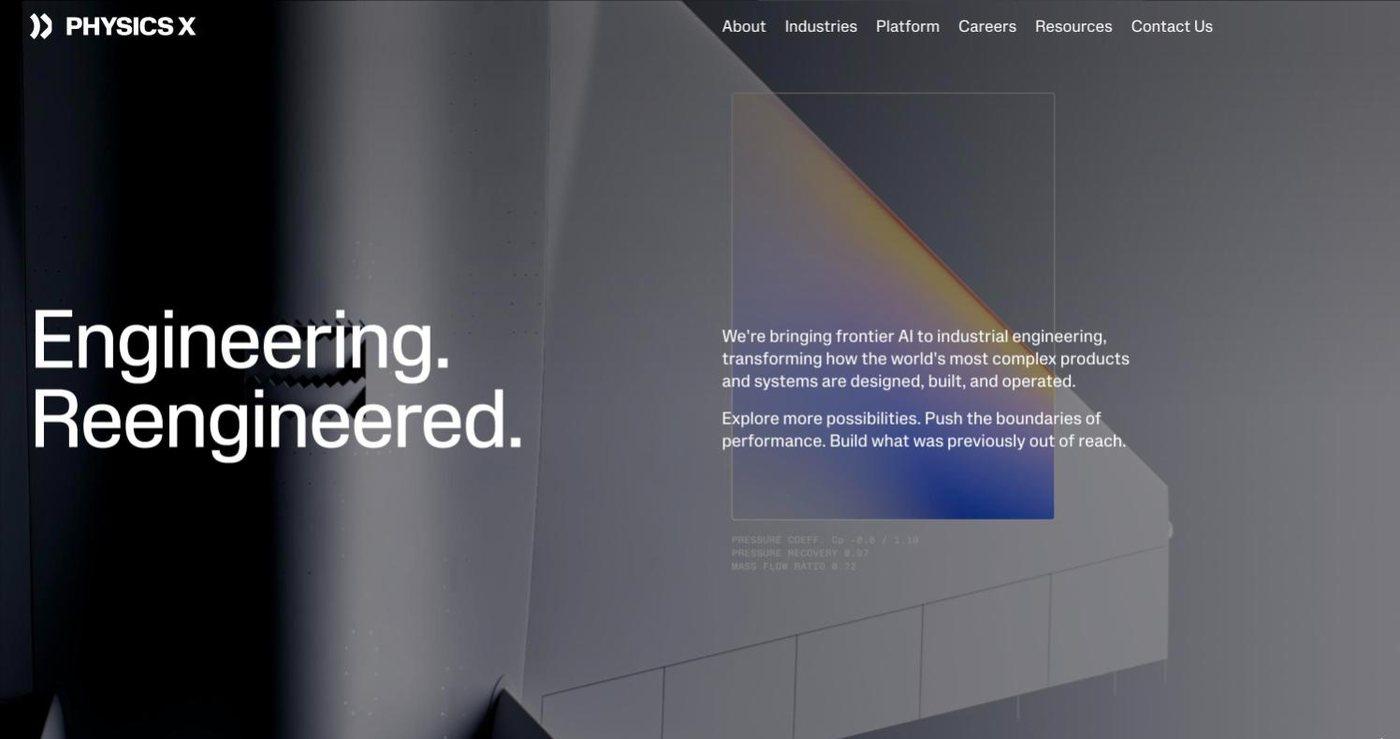
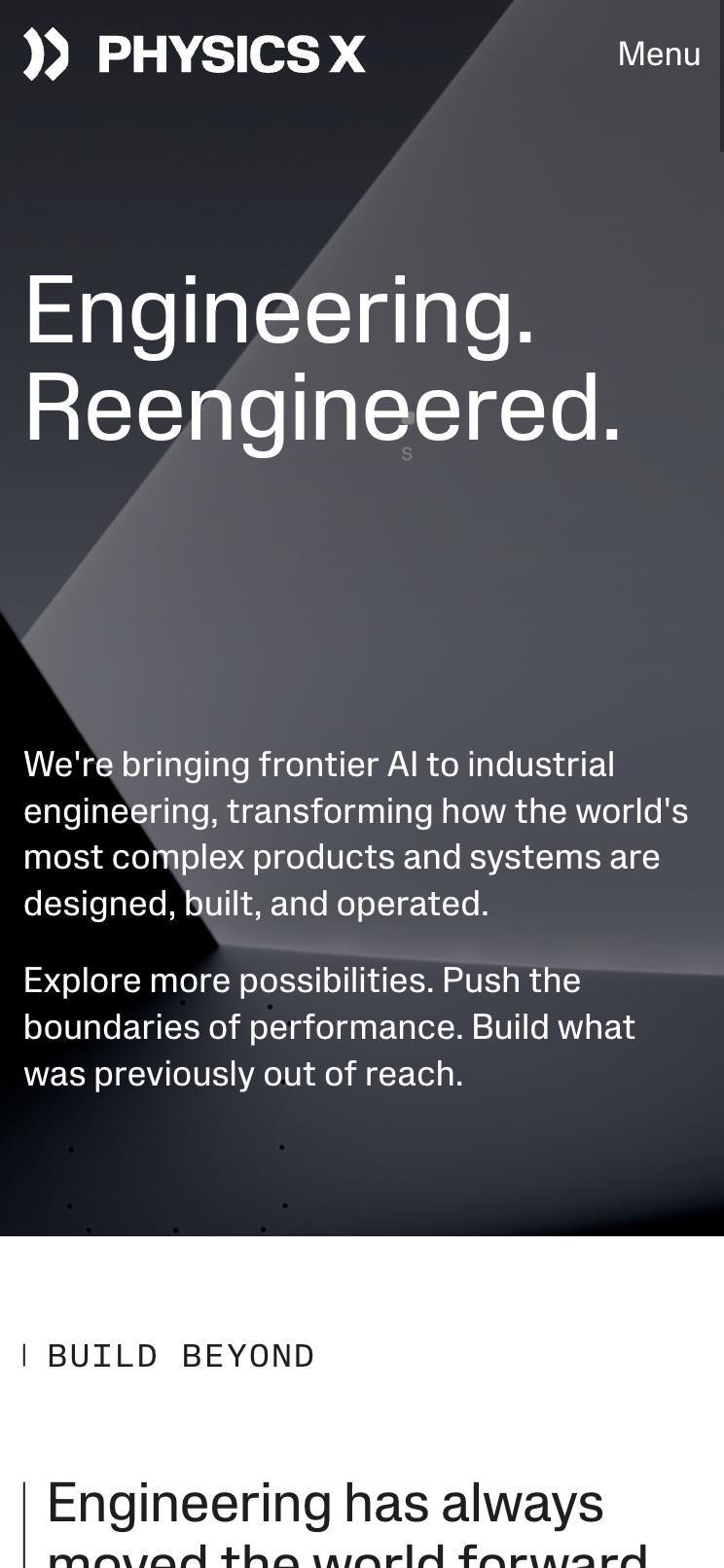
- PhysicsX's homepage hero shows a 3D render of an aircraft part with simulation data over it.
- The headline is 2 words: “Engineering. Reengineered.”.
- There's no button in the hero. Contact Us sits in the navigation.
- The headline is set in PhysicsX (custom), 78px.
- PhysicsX's homepage scores 45 out of 100 on our homepage scorecard. Its first screen is focused on our 5-second test (72 out of 100 on desktop, 20 on a phone).
- Measured November 2026.
Hero palette
- #1A1A1A
- #FFFFFF
- #F2B84B
- #3B5BDB
The milestone
PhysicsX by the numbers
PhysicsX builds AI software for industrial engineering. Its platform brings simulation, physics AI and engineering data together, so teams in aerospace, automotive, semiconductors and energy can test far more designs, far faster.
- $155M+total Series B, valuing PhysicsX at nearly $1BSource: PhysicsX
- 150+people on the team, according to PhysicsXSource: PhysicsX
- 4x+revenue growth over two years, according to PhysicsXSource: PhysicsX
- In June 2025 PhysicsX raised a $135M Series B led by Atomico. It said it had grown to a team of over 150 and more than quadrupled revenue in two years. Source: PhysicsX
- In November 2025 an investment from NVentures, NVIDIA's venture arm, took the Series B to more than $155M, valuing the company at nearly $1B. Source: PhysicsX
Design moves that work
4 things the PhysicsX site does well
- 01
Homepage
Two words, one idea
“Engineering. Reengineered.” works like a magazine cover, and the subhead says it plainly: “bringing frontier AI to industrial engineering”. The image is a render of an aircraft part with a simulation panel over it, with pressure readings in small type, so the product's subject is in the first screen.
- 1Two words, one idea
- 2What it does, plainly
- 3Simulation data on the render
- 4No button: contact is in the nav
- 02
Homepage
The category, named over a simulation
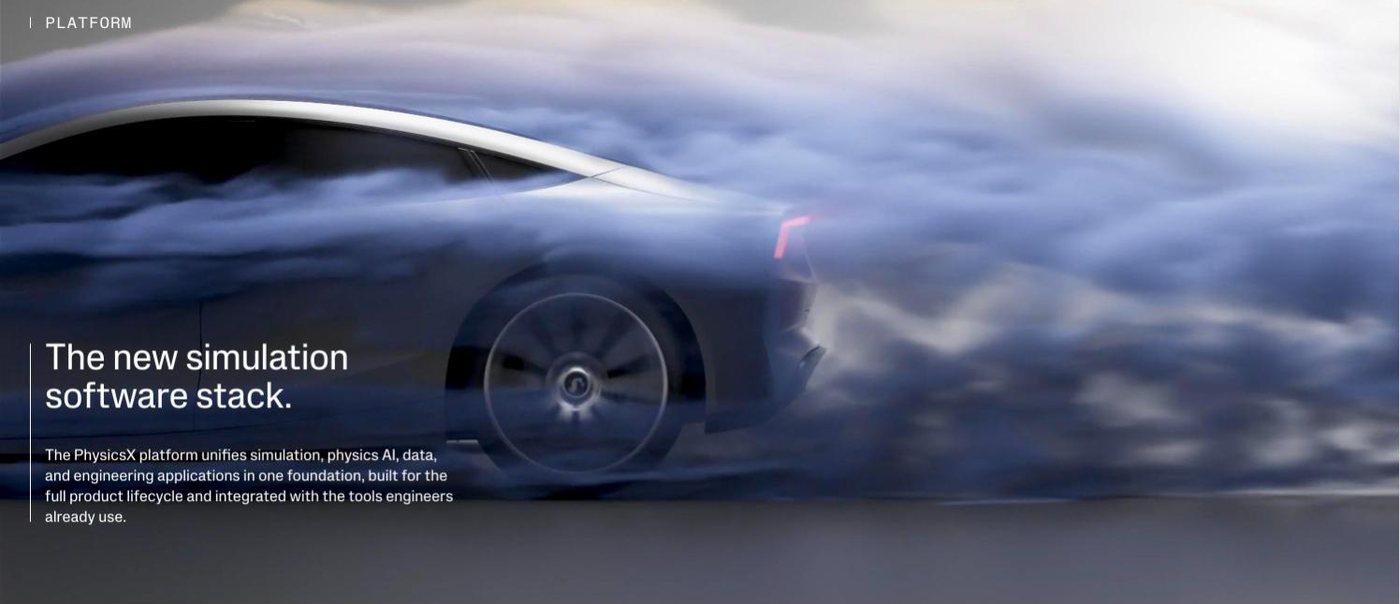
“The new simulation software stack.” names the category it wants to own, over a full-width film of airflow around a car. The copy adds that it's “integrated with the tools engineers already use”, which answers the switching question early.
- 1The category, named
- 2A simulation as the visual
- 3Works with existing tools
- 03
Homepage
Five industries, one at a time
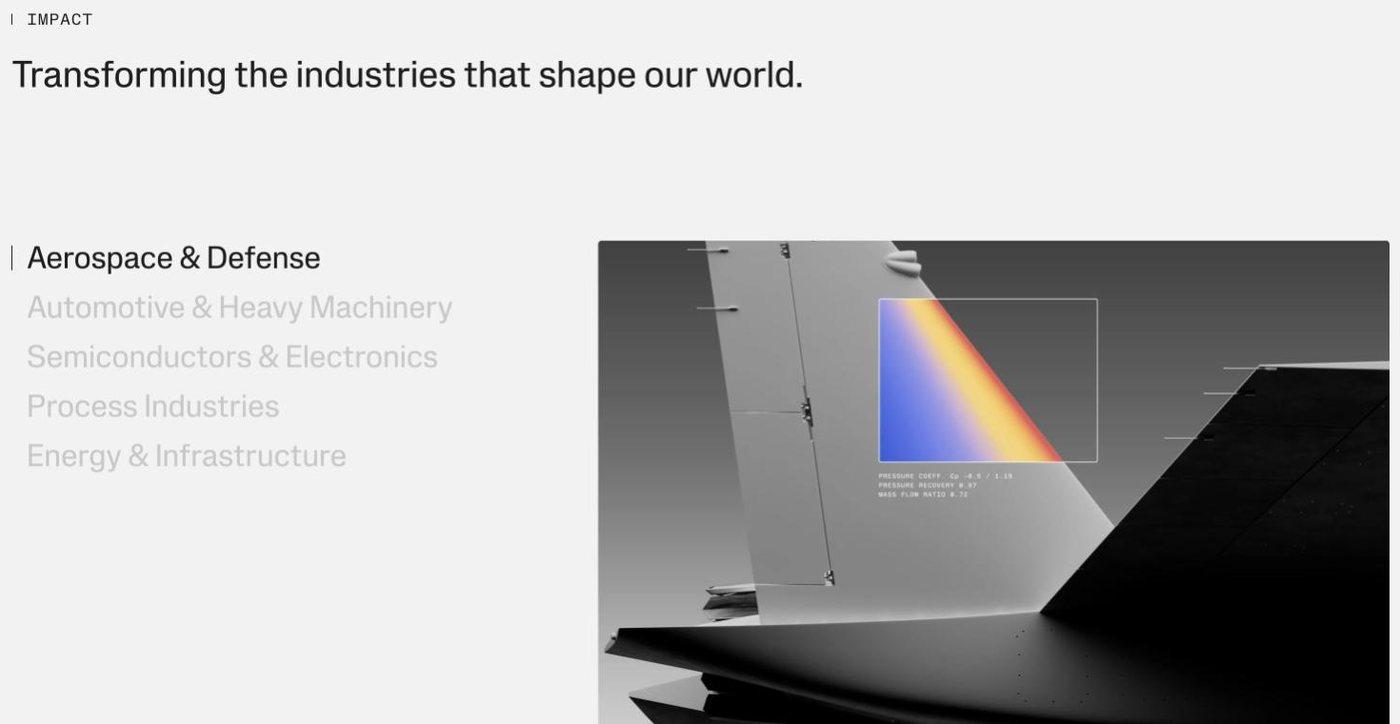
“Transforming the industries that shape our world.” lists five industries, from aerospace and defence to energy and infrastructure. One is highlighted at a time, with a matching image that carries the same simulation panel.
- 1Where it's used
- 2Five industries, one at a time
- 3The same simulation layer
- 04
Homepage
A British customer story, on film
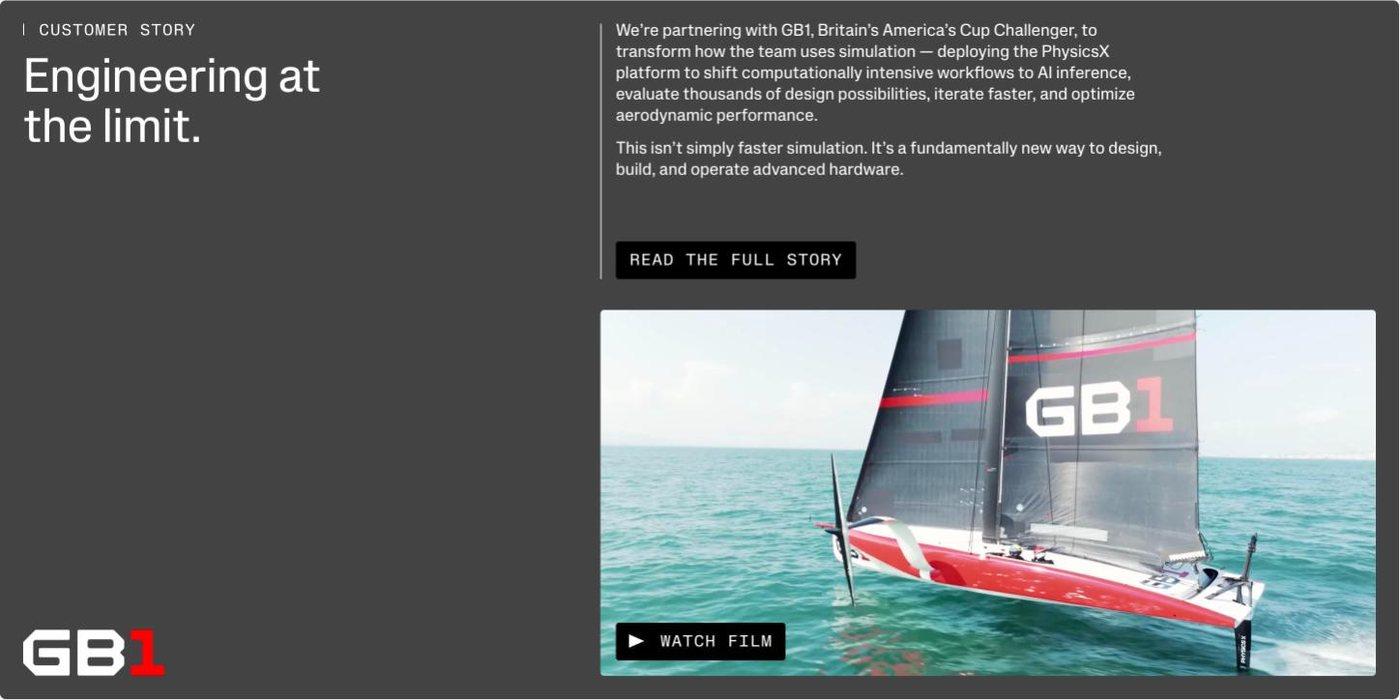
“Engineering at the limit.” features GB1, Britain's America's Cup challenger, and says what they did in specifics: moving heavy simulation work to AI inference and evaluating thousands of designs. There's a written story and a film.
- 1A short, bold heading
- 2What they did, in specifics
- 3A film, not just a write-up
- 4The customer's logo
Homepage scorecard
PhysicsX scores 45 out of 100
Six checks of homepage best practice, the same ones we use on any site. Each is scored from the homepage as we captured it.
Says what it is and who it's for
10 / 20
20 if the first screen says what the product does and who it's for; 10 if one of those is left vague; 0 if neither.
Shows the product
10 / 20
20 if real product (interface, code or output) appears in the hero or the next section; 10 if it appears further down; 0 if not at all.
Proof early on
10 / 20
20 if logos, figures or named customers appear in the first two screens; 10 if further down; 0 if none.
A clear next step
8 / 15
15 for a button or input in the hero; 8 if the only call to action is in the navigation; 0 if none.
Works on a phone
0 / 15
15 if the headline and the main action both fit the phone's first screen; 8 if only the headline does; 0 if neither.
First-screen focus
7 / 10
Our 5-second test score divided by 10. It measures how visually focused the first screen is, so full-bleed photos, video and gradients score lower by design.
First-screen focus, in detail
Three focal points: the headline, the subhead and the simulation panel. The render fills the background, so there's less empty space than the focus score alone suggests. We ran the first screen, at 1,362 by 868 pixels, through our free 5-second test on 24 November 2026.
Desktop, 1,362 by 868
Phone, 375 by 812
20
Busy by design · 11 focal points
The busiest phone first screen in the library. The render fills the screen behind the text, so there's little empty space and many areas compete, and there's no button in the first screen. First screen at 375 by 812 pixels, tested on 24 November 2026.
Test your own first screenThe takeaway for founders
What to borrow, at your stage
You probably don't have PhysicsX's team or budget. Here's how to take each idea with a smaller one.
- 01
A short headline can work if the subhead does the explaining.
At your stage: If you want a bold line, follow it with one plain sentence that says what you do and for whom.
- 02
Put your product's output on your imagery.
At your stage: A small layer of real output, such as readings, labels or results, turns stock-style imagery into proof.
- 03
Show one industry at a time.
At your stage: If you sell to several markets, let buyers pick theirs instead of reading all of them.
- 04
Choose a customer story your buyer will remember.
At your stage: One vivid customer, told in specifics, can do more than a wall of logos.
Send us your page or deck. We'll come back with a scoped redesign and a fixed quote within 48 hours.
More teardowns
Keep looking
- Nº 25 · hyperexponentialSeries B
 Series B · $73MScorecard 87/100
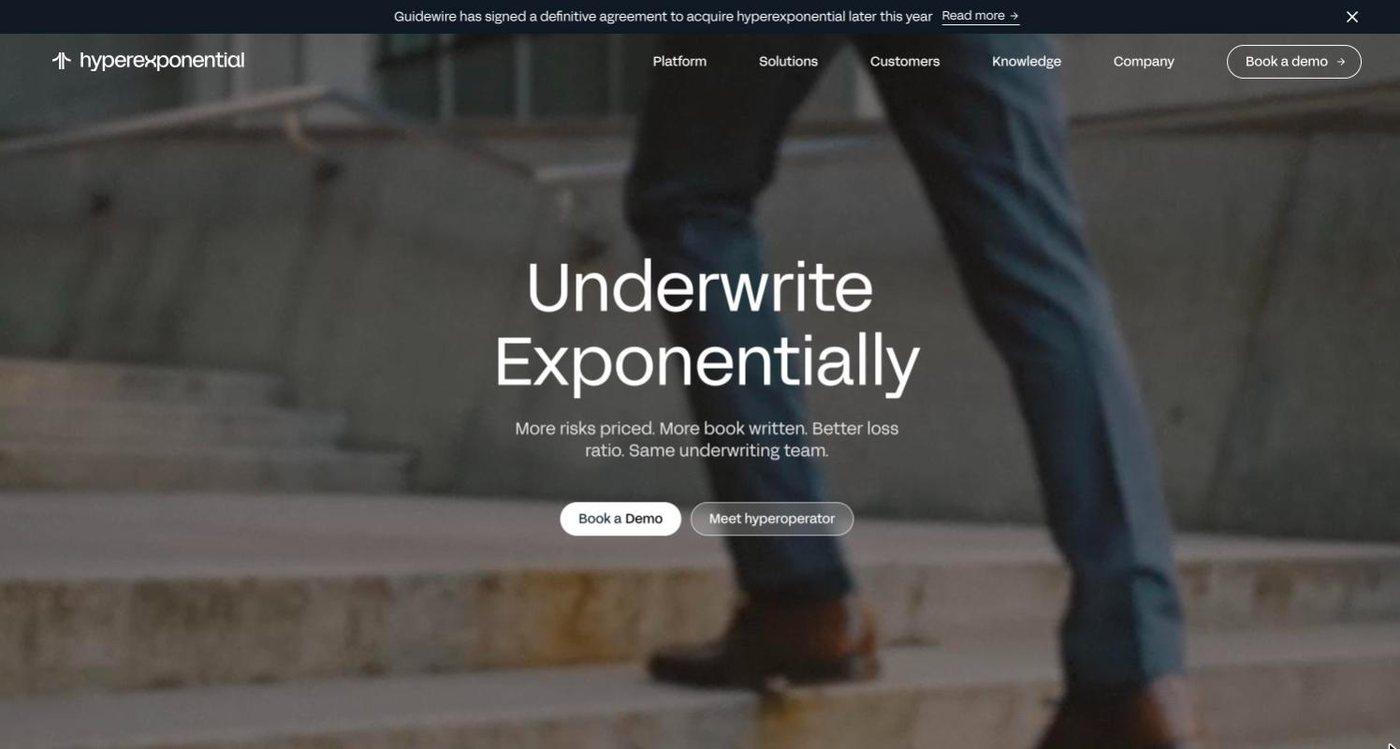
hyperexponential raised a $73M Series B. Its homepage speaks underwriting, not software.
How a London insurance pricing company sells to underwriters: a two-word promise, four outcomes in one line, carrier logos with a premium figure, and an AI agent shown answering a real request.
Read the teardown - Nº 24 · NscaleSeries B
 Series B · $1.1bnScorecard 57/100
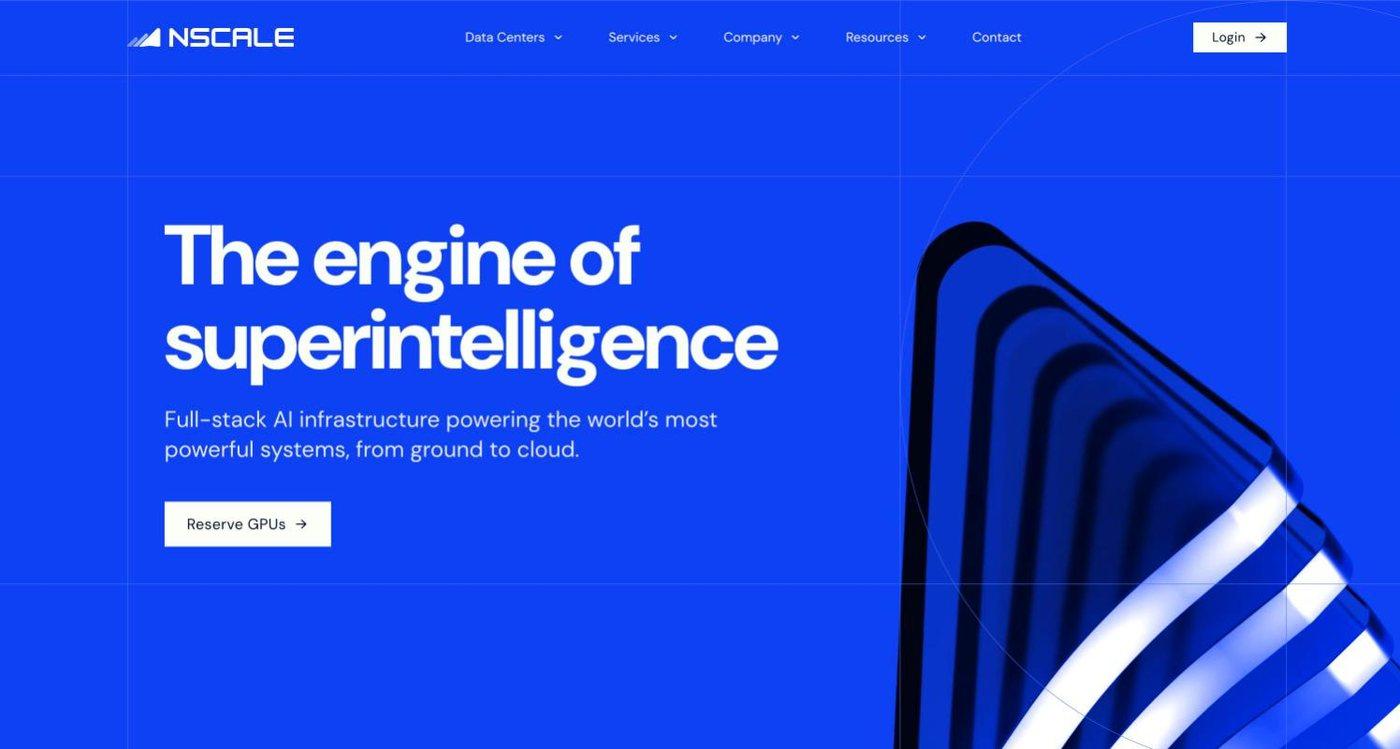
Nscale raised a $1.1bn Series B. Its homepage sells AI infrastructure with one bold line and one button.
How a UK AI infrastructure company sells to AI labs and enterprises: a five-word claim, a button that names the product, the stack drawn layer by layer, and a quote from the UK's AI minister.
Read the teardown - Nº 23 · QuantexaCategory leader
 Series F · $175MScorecard 88/100
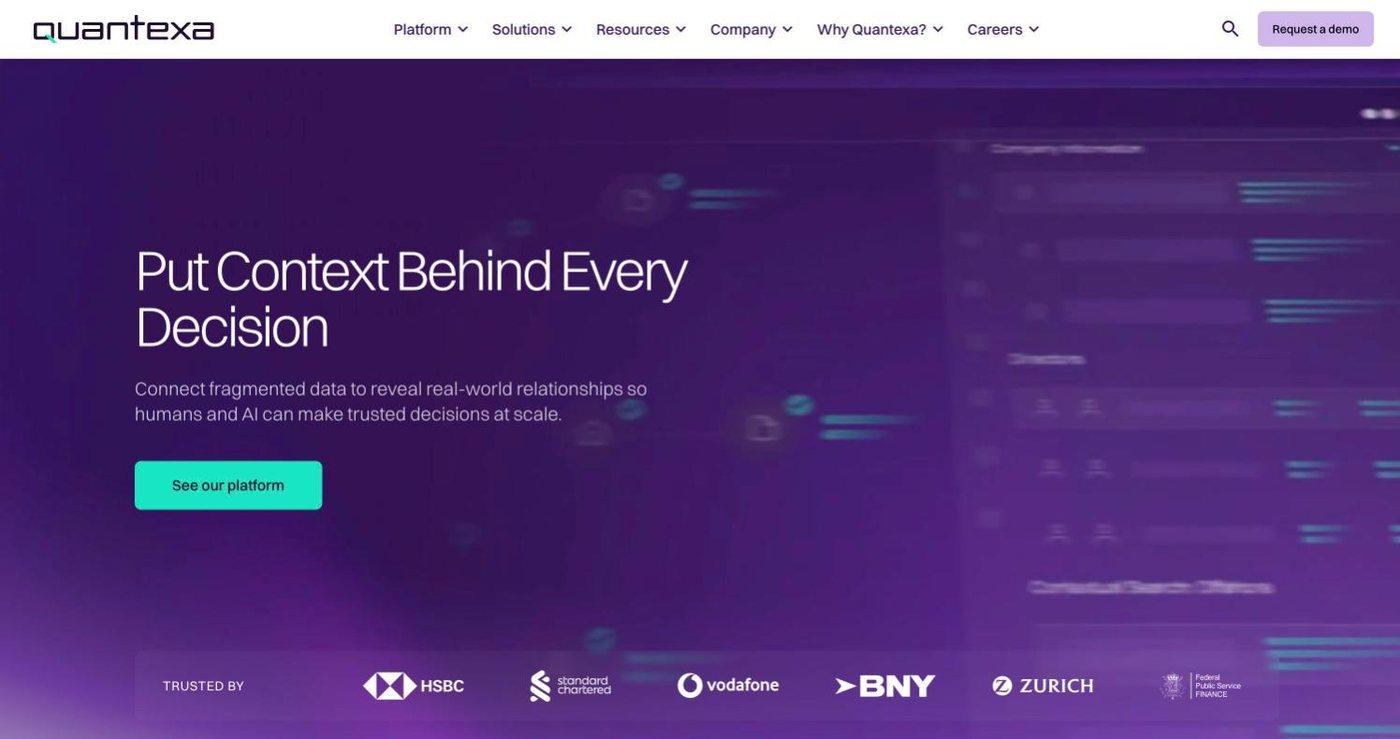
Quantexa raised a $175M Series F. Its homepage puts the bank logos in the first screen.
How London's decision intelligence company sells to banks and governments: a promise about decisions, the product blurred behind the hero, recognisable customers straight away, and three outcomes in product UI.
Read the teardown
dgitl isn't affiliated with PhysicsX. Screenshots are used for commentary and belong to their owners. Figures are from the public sources linked above.