hyperexponential raised a $73M Series B. Its homepage speaks underwriting, not software.
How a London insurance pricing company sells to underwriters: a two-word promise, four outcomes in one line, carrier logos with a premium figure, and an AI agent shown answering a real request.
Published 24 November 2026
- Milestone
- Series B · $73M
- Homepage scorecard
- 87 / 100
- First-screen focus
- Focused
- Headline
- 2 words
In 30 seconds
What hyperexponential does well
Key facts
The first screen, measured
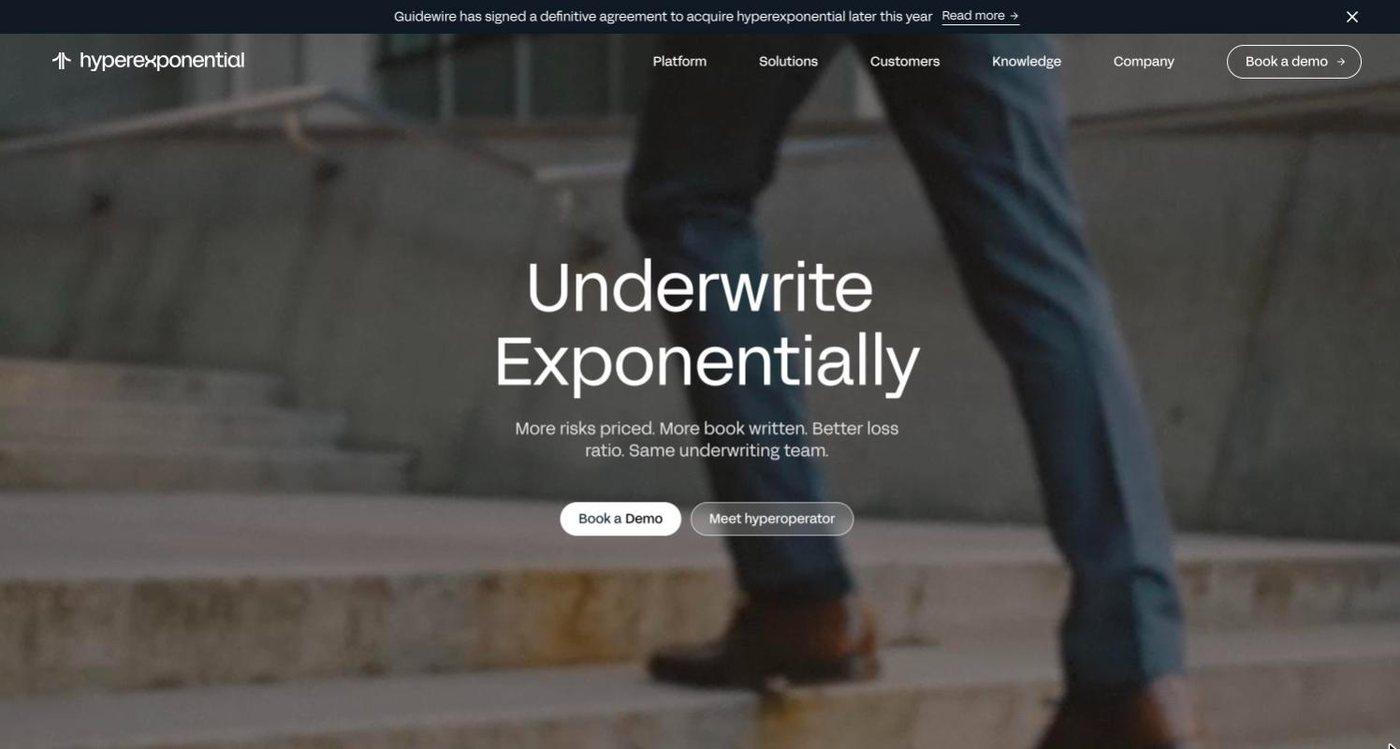
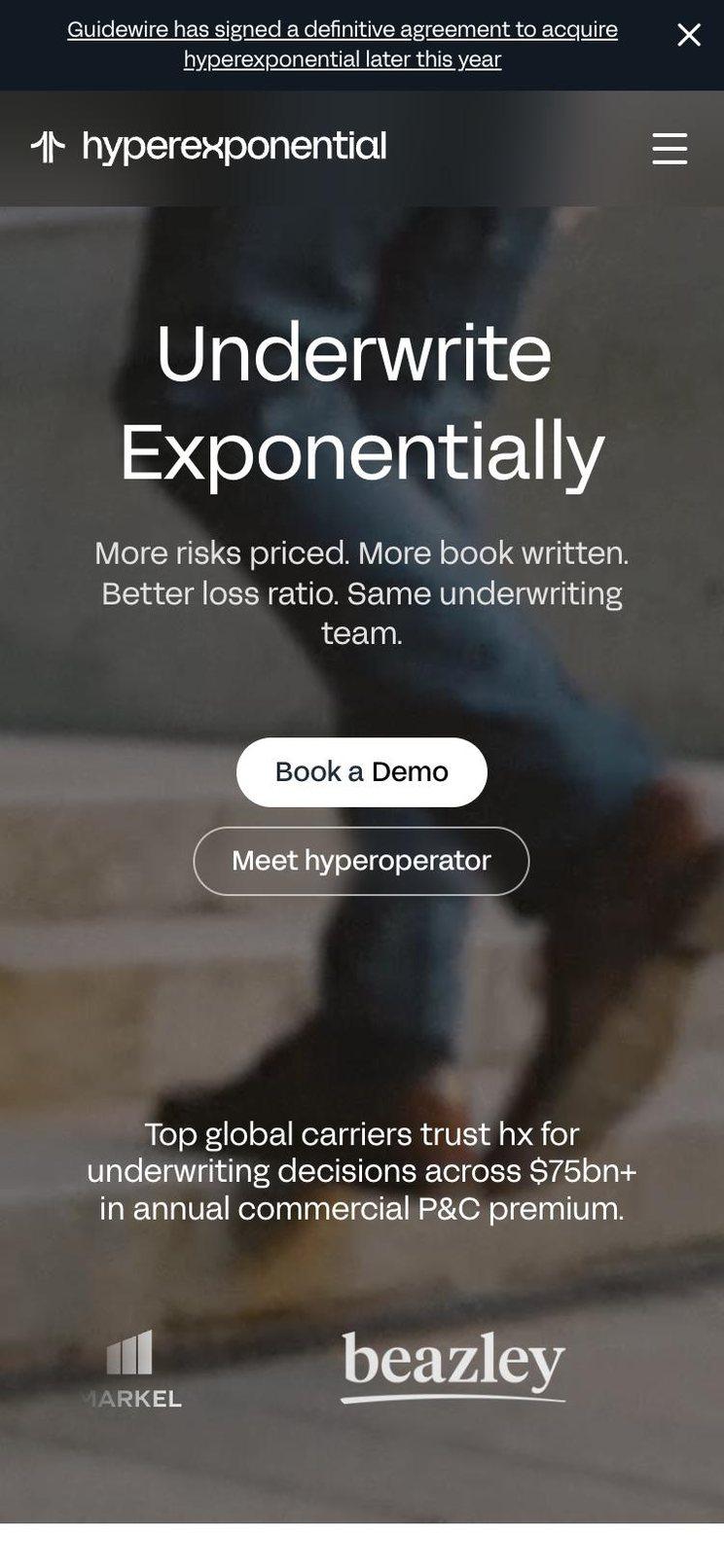
- hyperexponential's homepage hero shows a photo of someone climbing concrete steps.
- The headline is 2 words: “Underwrite Exponentially”.
- The hero has 2 buttons on the first screen.
- The headline is set in FFF Acid Grotesk.
- hyperexponential's homepage scores 87 out of 100 on our homepage scorecard. Its first screen is focused on our 5-second test (74 out of 100 on desktop, 41 on a phone).
- Measured November 2026.
Hero palette
- #121B26
- #FFFFFF
- #8FB4FF
The milestone
hyperexponential by the numbers
hyperexponential (hx) builds pricing and underwriting software for commercial property and casualty insurers. Underwriters use it to triage submissions, price complex risks, renew policies and monitor their portfolio.
- $75bn+in annual commercial P&C premium underwritten with hx by its customers, according to its homepageSource: hyperexponential.com
- 10xsales growth between its Series A and Series B, according to the companySource: hyperexponential press release
- In January 2024 hyperexponential raised a $73M Series B led by Battery Ventures, with Andreessen Horowitz and Highland Europe. Source: Battery Ventures (lead investor)
- Its homepage announces that Guidewire has signed a definitive agreement to acquire hyperexponential. Source: hyperexponential.com
Design moves that work
4 things the hyperexponential site does well
- 01
Homepage
Two words, then four outcomes
“Underwrite Exponentially” turns the company name into a promise. The subhead is four short outcomes in the buyer's own terms: “More risks priced. More book written. Better loss ratio. Same underwriting team.” A demo comes first, with the AI agent as the second button.
- 1The name becomes the promise
- 2Four outcomes in one line
- 3Demo first, then the AI agent
- 4Company news in the top bar
- 5A photo of someone climbing
- 02
Homepage
Carrier logos, then the whole job
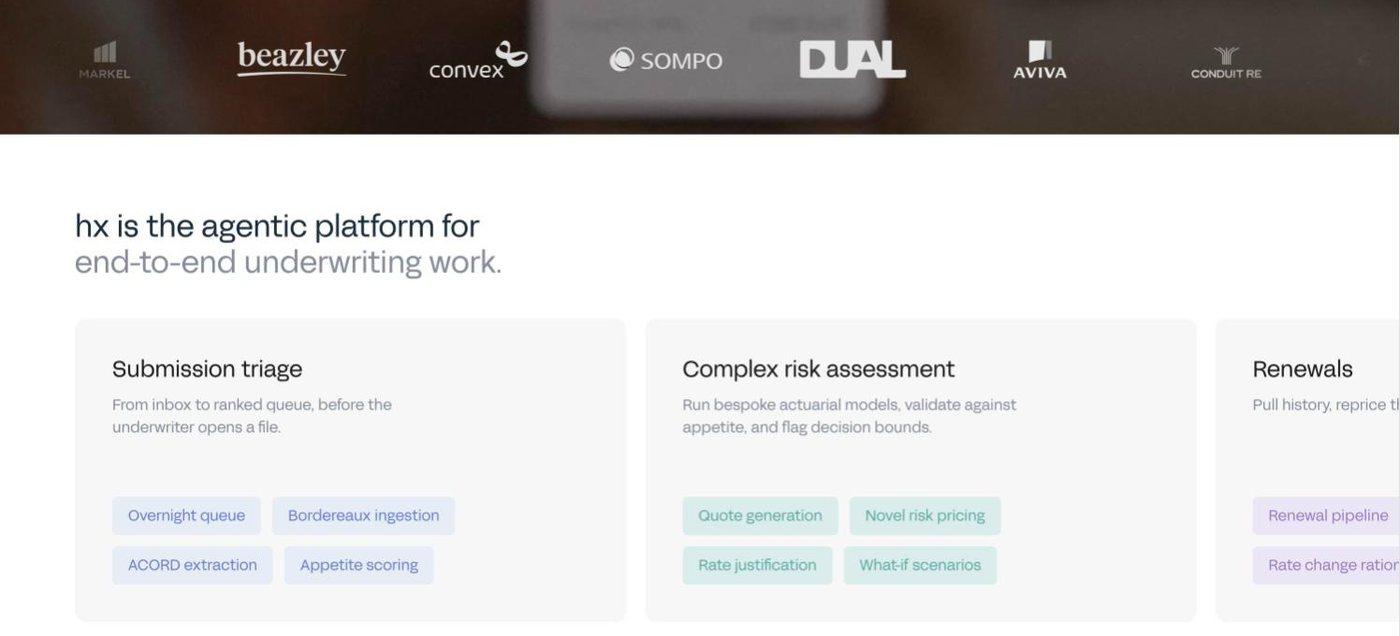
Right after the hero, “Top global carriers trust hx for underwriting decisions across $75bn+ in annual commercial P&C premium” sits over logos such as Beazley, Aviva and Markel. Then the platform is told as the stages of an underwriter's work, from submission triage to renewals, with the tasks named in underwriters' words.
- 1Carriers by name, with a figure
- 2The whole job, end to end
- 3One card per stage of the work
- 4Tasks in underwriters' words
- 03
Homepage
Customer leaders, in their own words
The quotes come from senior people at insurers, each with a photo, a name, a role and the company logo: an operations head at Markel Canada, a chief underwriting officer at Markel and the chief executive of Novacore.
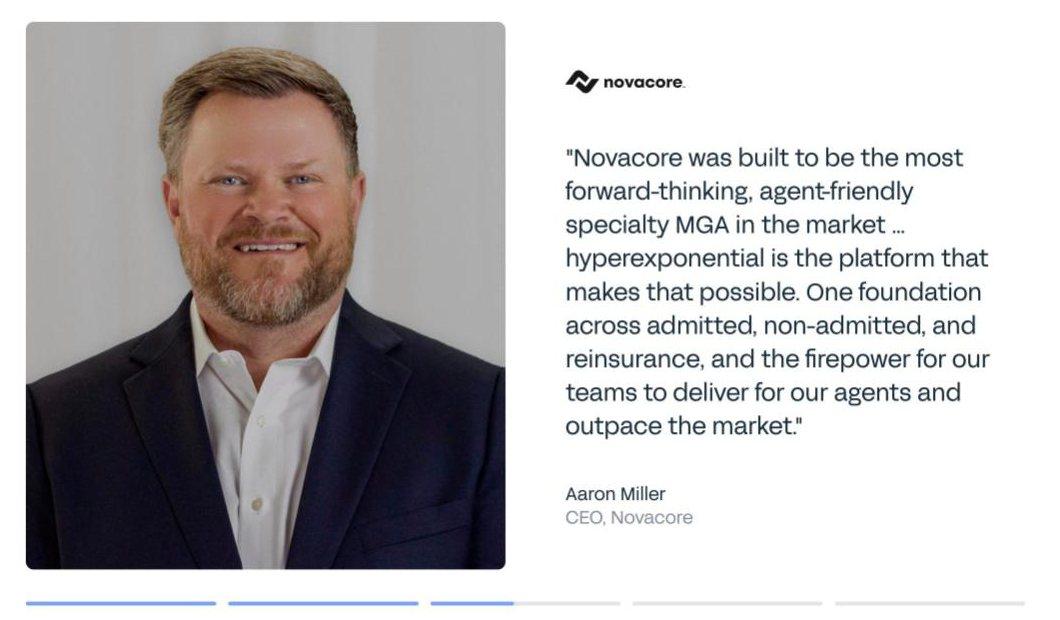
- 1A named leader, with a photo
- 2The customer's logo
- 3In their own words
- 4Name and role
- 04
Homepage
The AI agent, answering a real request
The platform section opens on hyperoperator, the AI agent. An underwriter asks for “3 deductible options for this risk” and gets three priced scenarios back, with one marked as the portfolio standard. Tabs lead to the other products: Workflow Builder, Calculation Engines and Portfolio Intelligence.
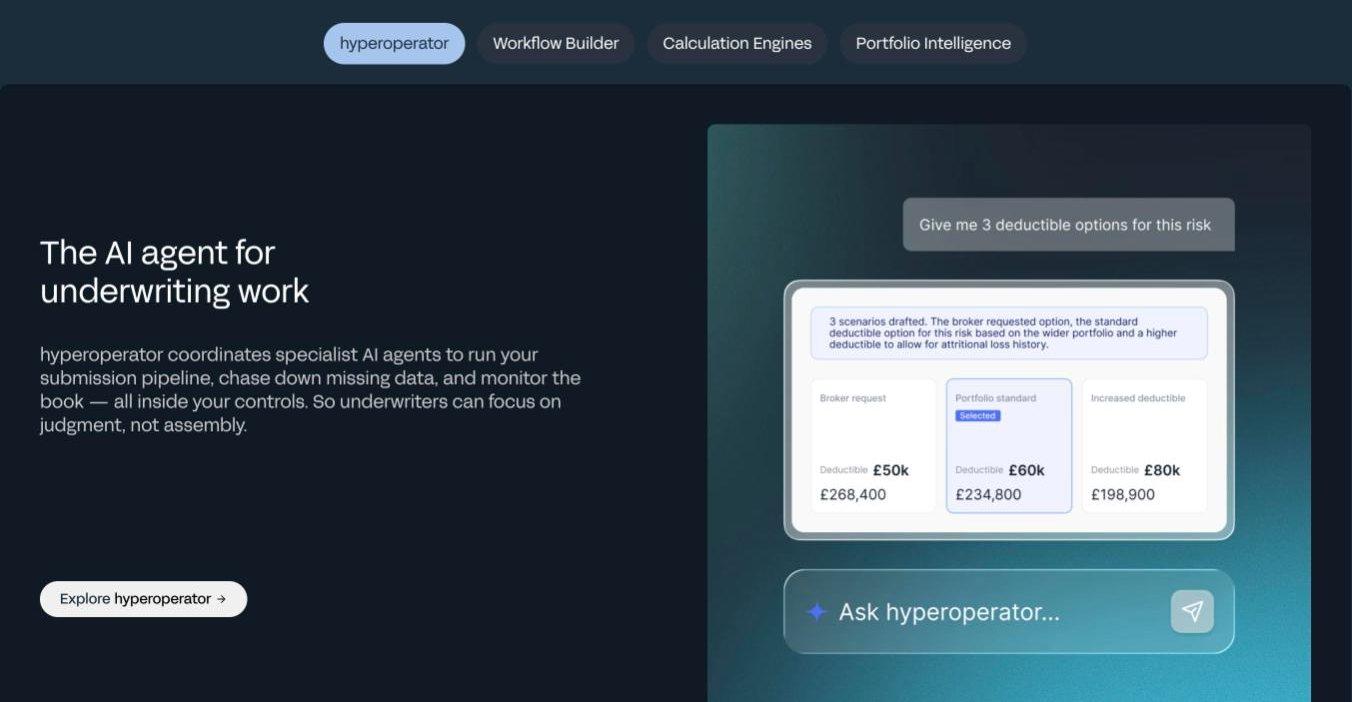
- 1Four products, in tabs
- 2The AI agent, named
- 3A real underwriting request
- 4Three priced options back
- 5Ask it anything
Homepage scorecard
hyperexponential scores 87 out of 100
Six checks of homepage best practice, the same ones we use on any site. Each is scored from the homepage as we captured it.
Says what it is and who it's for
20 / 20
20 if the first screen says what the product does and who it's for; 10 if one of those is left vague; 0 if neither.
Shows the product
10 / 20
20 if real product (interface, code or output) appears in the hero or the next section; 10 if it appears further down; 0 if not at all.
Proof early on
20 / 20
20 if logos, figures or named customers appear in the first two screens; 10 if further down; 0 if none.
A clear next step
15 / 15
15 for a button or input in the hero; 8 if the only call to action is in the navigation; 0 if none.
Works on a phone
15 / 15
15 if the headline and the main action both fit the phone's first screen; 8 if only the headline does; 0 if neither.
First-screen focus
7 / 10
Our 5-second test score divided by 10. It measures how visually focused the first screen is, so full-bleed photos, video and gradients score lower by design.
First-screen focus, in detail
The centred headline and buttons sit over a muted photo, so they stand out, though the photo fills the background. We ran the first screen, at 1,362 by 868 pixels, through our free 5-second test on 24 November 2026.
Desktop, 1,362 by 868
Phone, 375 by 812
41
Busy by design · 10 focal points
On a phone the headline, outcomes and both buttons fit, with the $75bn+ line and logos below. The photo behind everything adds a lot of detail. First screen at 375 by 812 pixels, tested on 24 November 2026.
Test your own first screenThe takeaway for founders
What to borrow, at your stage
You probably don't have hyperexponential's team or budget. Here's how to take each idea with a smaller one.
- 01
Write outcomes in your buyer's terms.
At your stage: “Better loss ratio” means more to an underwriter than “AI-powered pricing”. Use the metric your buyer reports.
- 02
Put a scale figure next to your logos.
At your stage: One number about what your customers run through you makes a logo row much stronger.
- 03
Describe the product as stages of the job.
At your stage: Lay out features in the order your buyer does the work, using their task names.
- 04
Show your AI doing one real task.
At your stage: A single realistic request and answer shows an AI feature better than a list of capabilities.
Send us your page or deck. We'll come back with a scoped redesign and a fixed quote within 48 hours.
More teardowns
Keep looking
- Nº 24 · NscaleSeries B
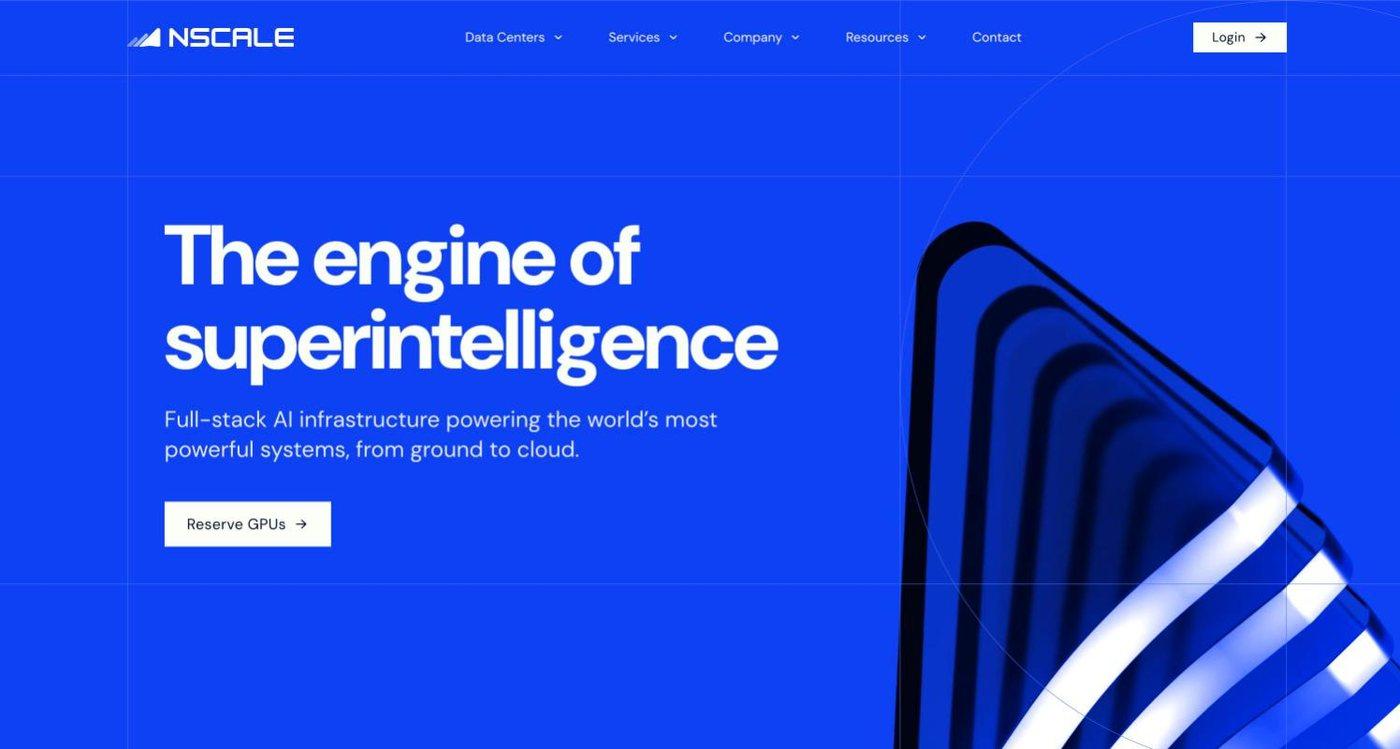 Series B · $1.1bnScorecard 57/100
Nscale raised a $1.1bn Series B. Its homepage sells AI infrastructure with one bold line and one button.
How a UK AI infrastructure company sells to AI labs and enterprises: a five-word claim, a button that names the product, the stack drawn layer by layer, and a quote from the UK's AI minister.
Read the teardown - Nº 23 · QuantexaCategory leader
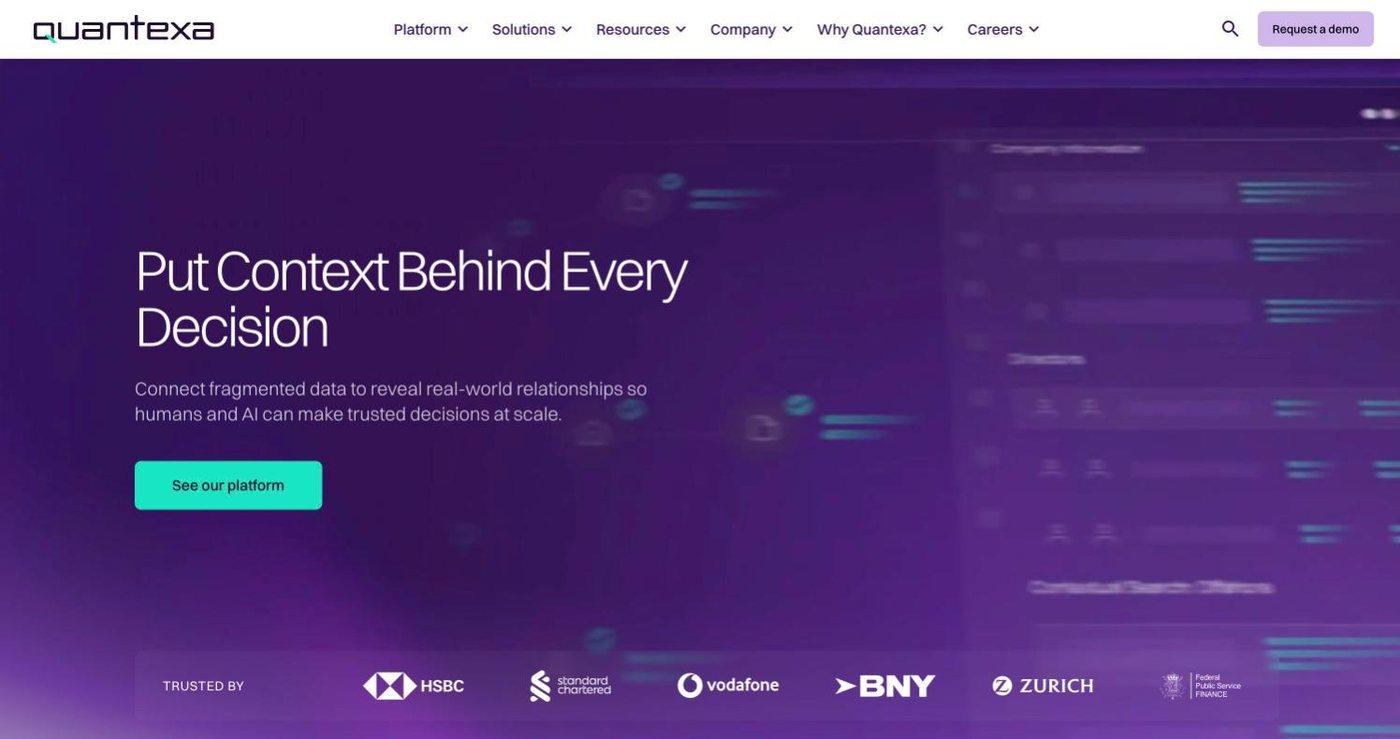 Series F · $175MScorecard 88/100
Quantexa raised a $175M Series F. Its homepage puts the bank logos in the first screen.
How London's decision intelligence company sells to banks and governments: a promise about decisions, the product blurred behind the hero, recognisable customers straight away, and three outcomes in product UI.
Read the teardown - Nº 22 · TideCategory leader
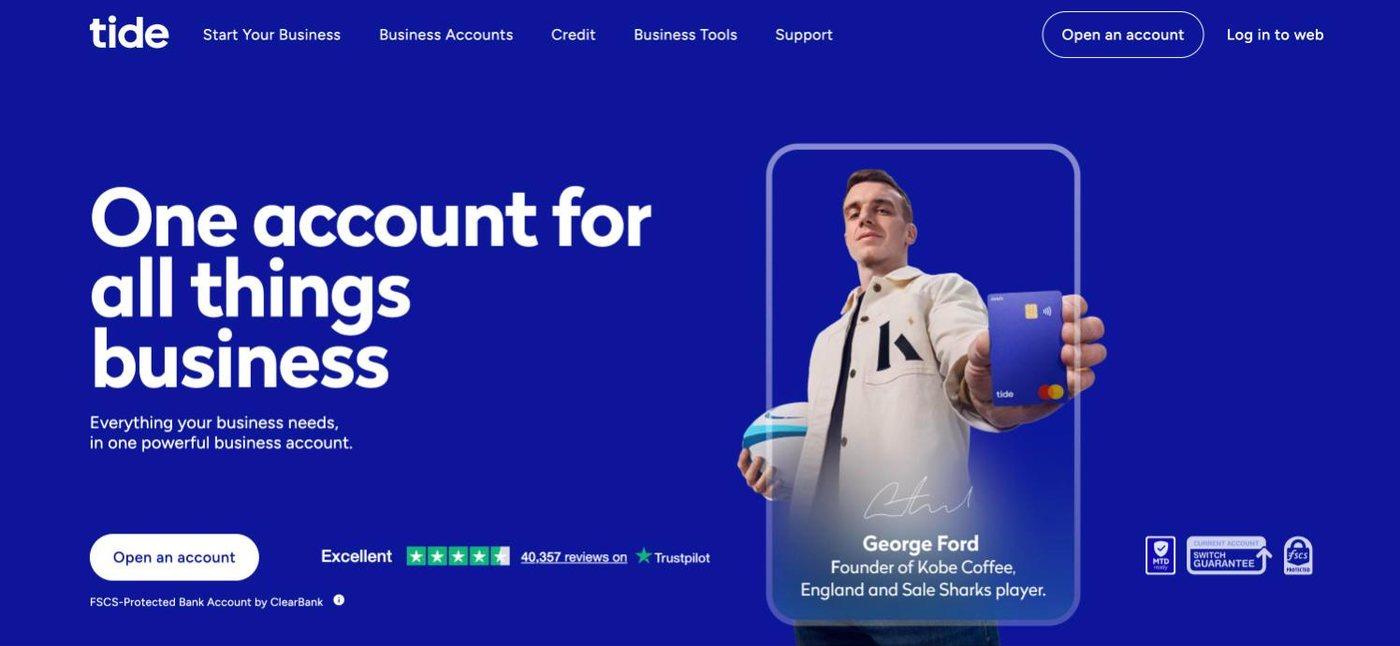 TPG investment · $120MScorecard 94/100
Tide raised $120M at a $1.5B valuation. Its homepage puts a customer and a card in the hero.
How the UK's business banking app sells to small firms: a named customer holding the card, reviews and guarantees in the first screen, the app with real numbers, and prices written into the copy.
Read the teardown
dgitl isn't affiliated with hyperexponential. Screenshots are used for commentary and belong to their owners. Figures are from the public sources linked above.