Buffer's seed deck raised $450K on the strength of one slide: traction.
How Buffer's first-time founders built a short seed deck around their numbers: a traction slide that leads with paying users, dated milestones with revenue attached, unit economics in one sentence and a landscape that puts the product in context.
Published by Buffer's founders on Buffer's blog. See the full deck
The raise
Buffer's deck by the numbers
Buffer schedules social media posts. Its founders published their seed deck and explained that, as first-time founders, they focused everything on the traction slide. They contacted around 200 investors, met about 50 and closed a $450K round from 18.
- $450Kseed round from 18 investors, according to Buffer's post
- ~200investors contacted
- ~50investor meetings
- 13slides in the published deck
Source: Buffer, and the deck itself.
Slide by slide
4 slides worth studying
- 01
Slide 5
Traction first, and paying users first within it
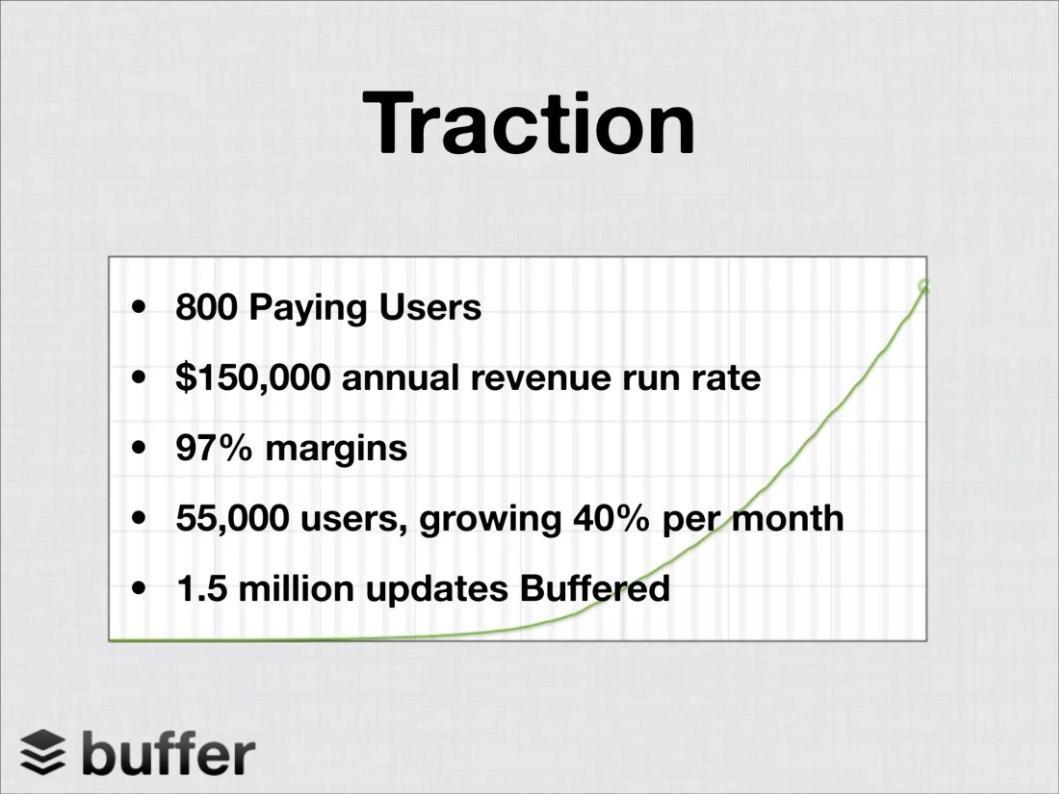
The founders say this was the slide they built the raise around. It leads with 800 paying users and a $150,000 revenue run rate before the bigger vanity number, and gives growth as a rate: 55,000 users, growing 40% a month. A rising curve sits behind the list.
- 1Paying users before total users
- 2Growth as a monthly rate
- 3The curve does the talking
- 02
Slide 6
Milestones with dates and revenue attached
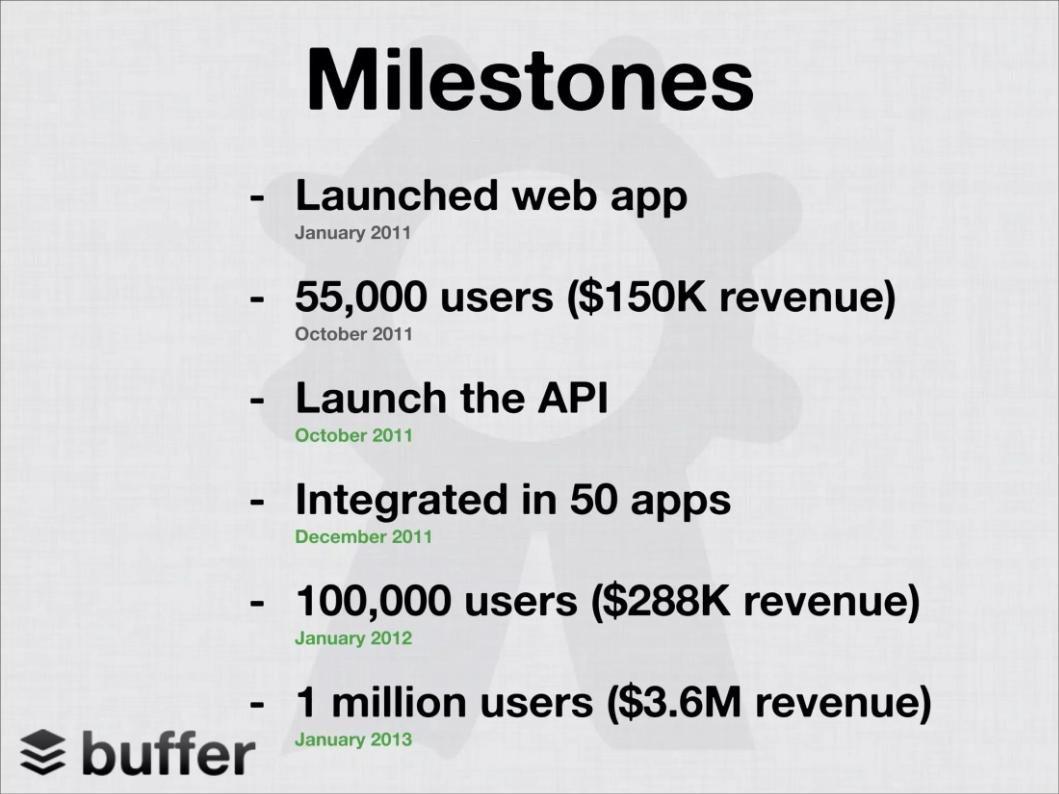
A dated list from launch to the next goal, each user milestone paired with revenue. The plan ends at 1 million users and $3.6M in revenue, which links the ask to a concrete target.
- 1Each milestone has a date
- 2The target the round is for
- 03
Slide 7
The business model as unit economics
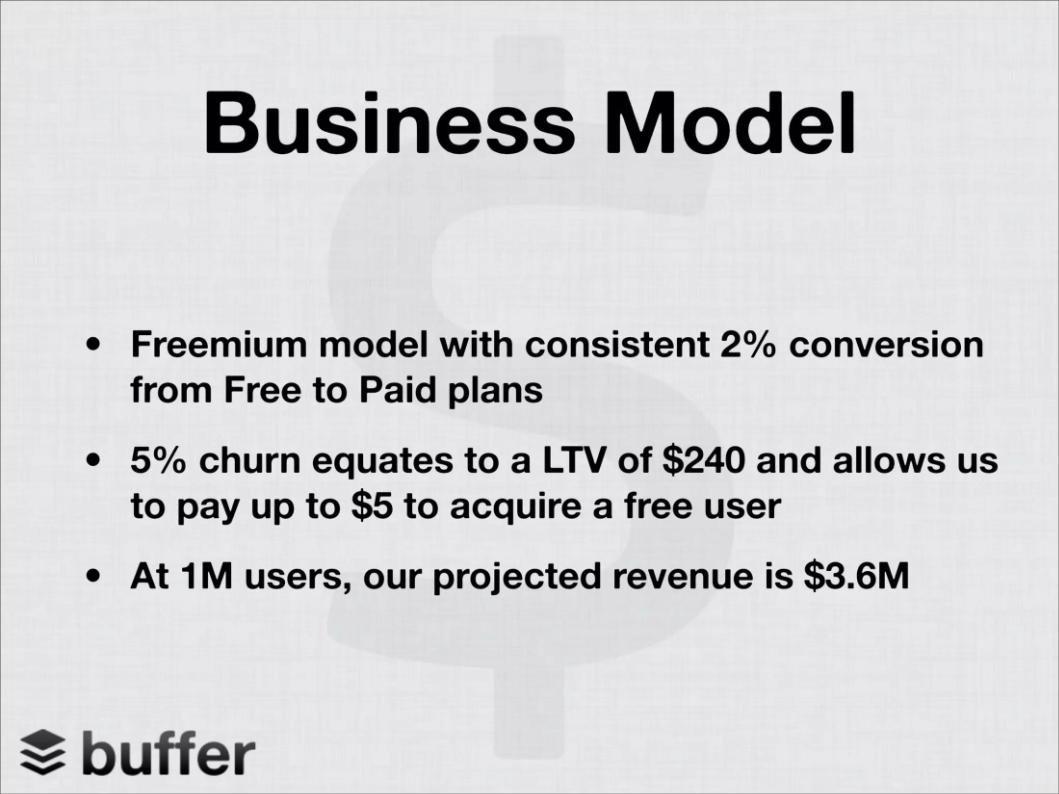
Three bullets give an investor everything needed to check the model: 2% free-to-paid conversion, 5% churn and a $240 lifetime value, which means Buffer can pay up to $5 to acquire a free user.
- 1Conversion, stated as a number
- 2What a user is worth, and what they can spend
- 04
Slide 11
A landscape that explains the category
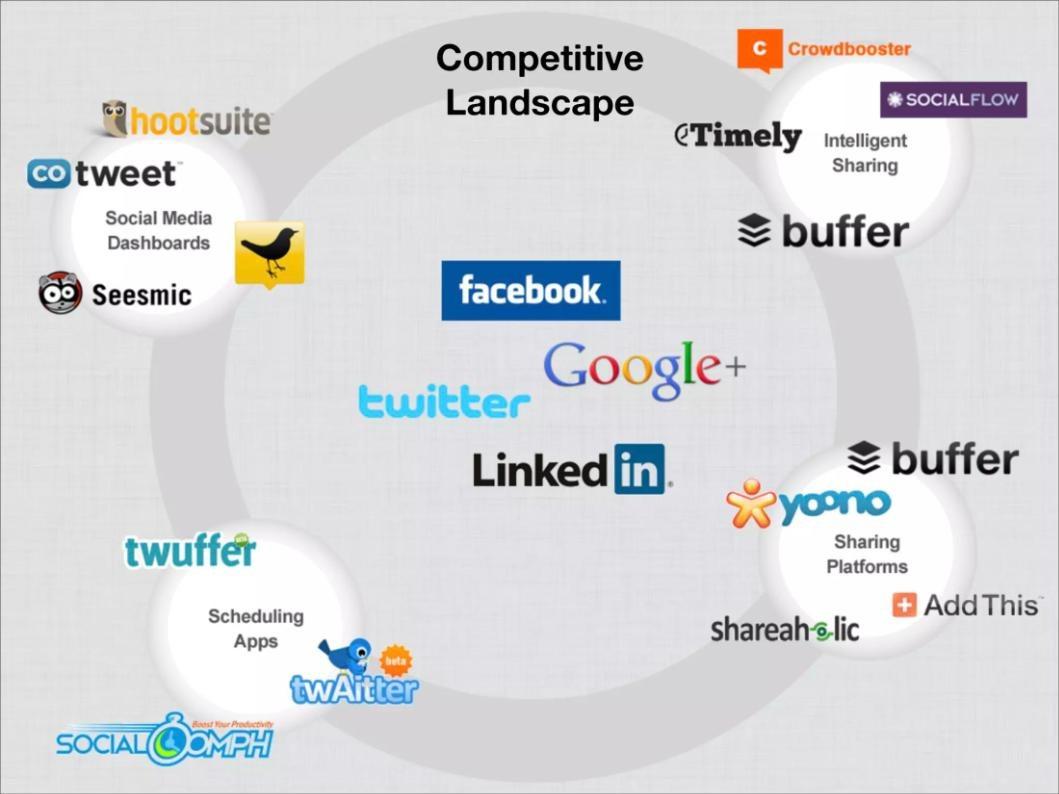
The founders say investor talks stalled until they made this slide as easy to understand as possible. It groups the alternatives into scheduling apps, dashboards, sharing platforms and intelligent sharing, around the networks at the centre, and shows where Buffer sits.
- 1The networks everyone depends on
- 2Buffer, placed in its categories
The takeaway for founders
What still works, at your stage
This deck is from 2013. The design has dated; the structure hasn't.
- 01
Build the deck around your strongest proof.
At your stage: If it's traction, put it early and make it the slide you rehearse most. If it's the team or a pilot, that's your traction slide.
- 02
Lead with the number that shows people pay.
At your stage: Ten paying customers beat ten thousand sign-ups. If nobody pays yet, lead with usage that shows a habit: weekly active, repeat use.
- 03
Give the business model as unit economics.
At your stage: Early numbers are fine if you label them: “pilot conversion 3 of 5” is honest and useful.
- 04
Use the landscape to explain the category, not to list rivals.
At your stage: Group alternatives by how buyers solve the problem today, then show where you fit. Simplify it until it ends the question.
Send us your current deck. We'll come back with a scoped redesign and a fixed quote within 48 hours.
dgitl isn't affiliated with Buffer. The slides belong to Bufferand are shown for commentary; figures come from the deck and the company's own post.